
Digital Insurance Card Project
Implementing a common, open standards-based model for issuing and verifying digital insurance cards.


Overview
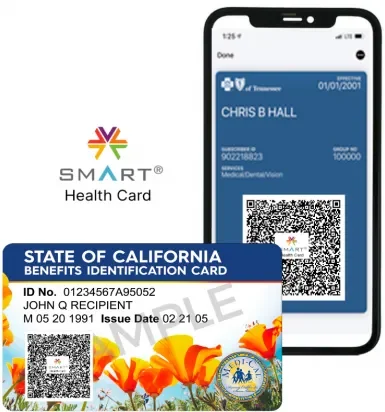
The Commons Project Foundation, the CARIN Alliance, and SMART Health IT are leading an initiative to enable every provider, payor, and insurance beneficiary in the United States to use a free and open-standards based digital insurance card. The SMART Health Insurance Card allows individuals to carry health insurance cards in their digital wallets or print them out, and easily share insurance information with health care providers at check-in.
Digital insurance cards offer significant benefits over existing plastic and paper cards:
Reduced expense and environmental impact of printing & mailing traditional plastic cards.
Improved customer experience.
Reduced administrative burden, costs, and errors associated with manual entry of insurance information.
More effective capture of insurance information and more efficient eligibility checks to reduce errors.
Open Standards Based Approach
SMART Health Insurance Cards deliver many benefits - for patients, providers, health plans, states and CMS. From enabling faster and easier access to care, to streamlining check-in and eligibility verification, to reducing the costs and environmental impact of printing and mailing plastic cards. But those benefits can only be realized if digital insurance cards are implemented in a common, standards-based way. Otherwise, the healthcare community will end up with a fragmented system of digital insurance card types that will not lead to a seamless interoperable solution for all stakeholders.
The use of community and consensus driven open standards means:
Insurance cards issued by any payor can work at any provider.
No additional fees or costs associated with the use of digital insurance cards.
No particular vendor can lock in customers or have an inherent advantage over another.
Consumers have the flexibility to keep and use their cards as they see fit.
Building On Existing Standards
The SMART Health Insurance Card relies on the SMART Health Cards technology and the HL7 CARIN Digital Insurance Card Implementation Guide.
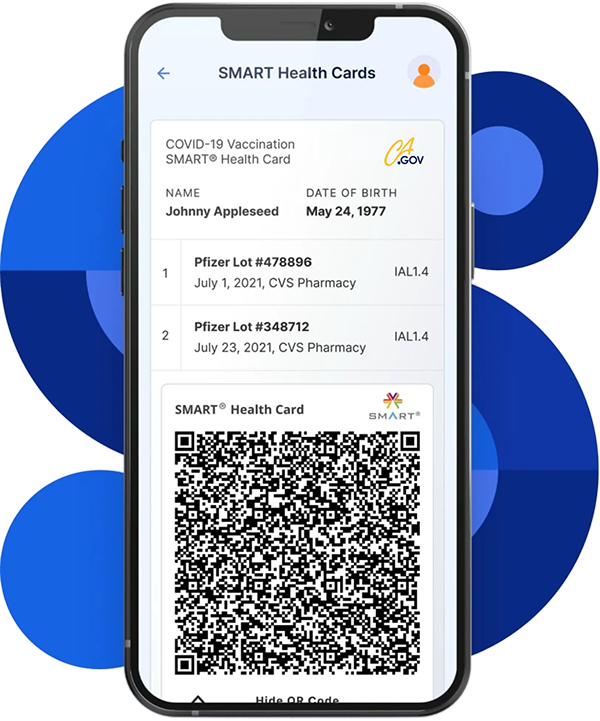
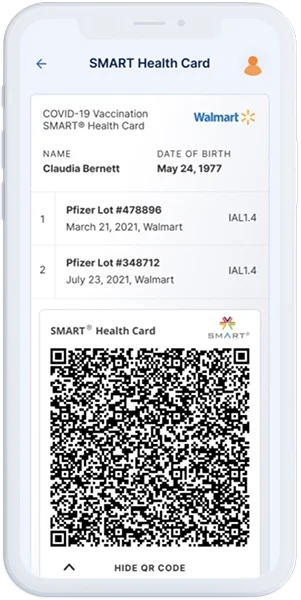
The Commons Project worked with Apple, CARIN Alliance, Cigna/Evernorth, Mayo Clinic, Microsoft, MITRE and UCSD to launch the VCI coalition and develop the SMART Health Card standard to make it possible for individuals to securely receive, store, and share health information in the form of verifiable credentials. This technology was initially used for proof of COVID vaccination and test results, but was purposefully built to support any standardized, FHIR-based health data. SMART Health Links extend the SMART Health Card technology to account for larger, dynamic data and can be used for digital insurance cards.
The CARIN Alliance, with support from leading payors, providers, and technology vendors, developed the CARIN Digital Insurance Card Implementation Guide to define and agree on all of the required data elements for plastic insurance cards and map those to a standardized HL7 FHIR profile. The updated Implementation Guide follows HL7 consensus processes to include detailed specifications for combining this data profile with the SMART Health Card verifiable credential secure envelope.
500 Million People Used SMART Health Cards Globally
During COVID, The Commons Project and VCI worked with a diverse set of stakeholders to ensure that the newly created SMART Health Cards standard was adopted and supported. This effort was massively successful, making SMART Health Cards available to over 500 million people world wide.
This includes adoption by most US states, all leading pharmacy chains (CVS, Walgreens, Walmart), over 1000 health systems supported by leading health platforms (Epic, Cerner, Oracle, Microsoft), leading health plans (Cigna, United Healthcare), leading mobile platforms (Apple, Samsung, Google), and countries around the world (Canada, Japan, Taiwan, Senegal, etc.)


Beyond COVID, the CARIN Alliance has a long track record of building consensus among key industry stakeholders, creating and balloting standards, driving adoption of those standards, and ultimately seeing those standards become part of US policy. The most relevant example of this is Blue Button 2.0, the patient data access protocol required for any insurance plan providing Medicare and Medicaid services.
This initiative will employ the repeatable steps for successful adoption of new standards building on these past efforts, including:
Focusing on community driven, easily adoptable, open standards as described above.
Publishing clear and actionable implementation guides including sample code and applications for issuing, storing, decoding, displaying, and verifying digital insurance cards.
Creating web-based and distributable materials for payors, providers, and people with information, how-tos, FAQs, and up to date directories of participating organizations.
Working with public and private sector to encourage and support early adopters.
As adoption grows, working to include digital insurance cards in future policy.
How to Participate
Participate as a Payor
Insurance providers can provide members and beneficiaries with digital copies of their insurance card following the new standard. Payors are well positioned to provide SMART Health Insurance Cards thanks to existing investments in FHIR-based patient access APIs and interoperability more broadly. Supporting digital insurance cards could include:
Mailing printed copies of QR codes and links alongside other membership cards and materials.
Making QR codes and links available in the portal or mobile application so members can download or print copies of their cards.
Giving members the ability to add digital insurance cards to the mobile wallet of their choice.
What you can do now as a payor: Begin planning your support for digital insurance cards. Be sure your technical teams review the resources provided below. Participate in HL7 virtual Connectathons to test the latest versions of the standards. Reach out to us to express interest, provide feedback, and get looped into existing work streams.

Participate as a Technology Vendor
Technology vendors who provide electronic health records and insurance processing will want to ensure that their customers are prepared. Be sure your technical teams review the resources provided below. Participate in HL7 virtual Connectathons to test the latest versions of the standards.
Technology vendors building consumer applications and digital wallets can build tools to support retrieving, storing, and sharing digital health insurance information with healthcare providers.
Reach out to us to express interest, provide feedback, and get looped into existing work streams.

Participate as a Healthcare Provider
Healthcare providers will want to be prepared to receive and ingest SMART Health Insurance Cards. This will mean training staff as well as using and potentially investing in this new technology. Supporting digital insurance cards could include:
Allowing patients to upload digital insurance cards during web or mobile check-in flows.
Scanning QR codes during in-person check-in.
Incorporating information from the digital insurance card into existing admin workflows.
What you can do now as a provider: If you rely on your EHR or other technology vendor for receiving and processing insurance information, get in touch with them to express your interest in supporting SMART Health Insurance Cards. If you maintain your own technology platform that handles insurance information, be sure your technical team is familiar with the resources below and consider participating in HL7 virtual Connectathons to test the latest versions of the standards. Reach out to us to express interest, provide feedback, and get looped into existing work streams.
Resources for Developers
There is a wealth of information, example applications, and source code available for the various components of the Digital Insurance Card project. Some recommended resources:
CI Build for the CARIN Digital Insurance Card. Contains the complete proposed guidance for how to build the FHIR profile then generate and share (or decode) the SMART Health Card and SMART Health Link.
SMART Health Card specification. Provides the complete specification for issuing and verifying SMART Health Cards, along with links to validation tools, examples, and source code.
SMART Health Links specification. Provides the complete specification for generating and verifying SMART Health Links along with examples and source code.
HL7 September 2023 Connectathon Confluence Page. Provides some useful information for those interested in testing the current versions of the standards, including sample QR codes.
SMART Health Card/ Links Reader App. Development version of a free and open source application to decode, display, and verify SMART Health Insurance Cards (along with other SMART Health Cards and Links). The code behind this may be useful for those looking to read SMART Health Cards and Links. The repo contains several sample cards to test as well.
Recording of a June 2023 HL7 CARIN Digital Insurance Card working session. A talk through of the implementation guides and a variety of Q&A. Passcode = %1I+ch6g